Introduction
Anyone who has ever managed multiple websites knows the feeling well. The “multi-domain nightmare” begins the moment you are forced to juggle renewals, track expiry dates, and maintain separate Multi-Domain EV SSL certificates for every individual domain. It becomes even more overwhelming when clients, business units, or expanding digital projects introduce new URLs into the mix.
In the global SSL landscape, Sectigo remains one of the most trusted Certificate Authorities, known for strong validation, massive compatibility, and enterprise-grade security. This guide will walk readers through everything they need to know. From understanding what a Multi-Domain EV SSL actually is to exploring its key benefits, learning the step-by-step buying process, reviewing deployment best practices, comparing available options, and clearing up common questions, this article delivers a complete, practical breakdown.
Understanding Multi-Domain Certificates
What Are Multi-Domain (SAN) Certificates?
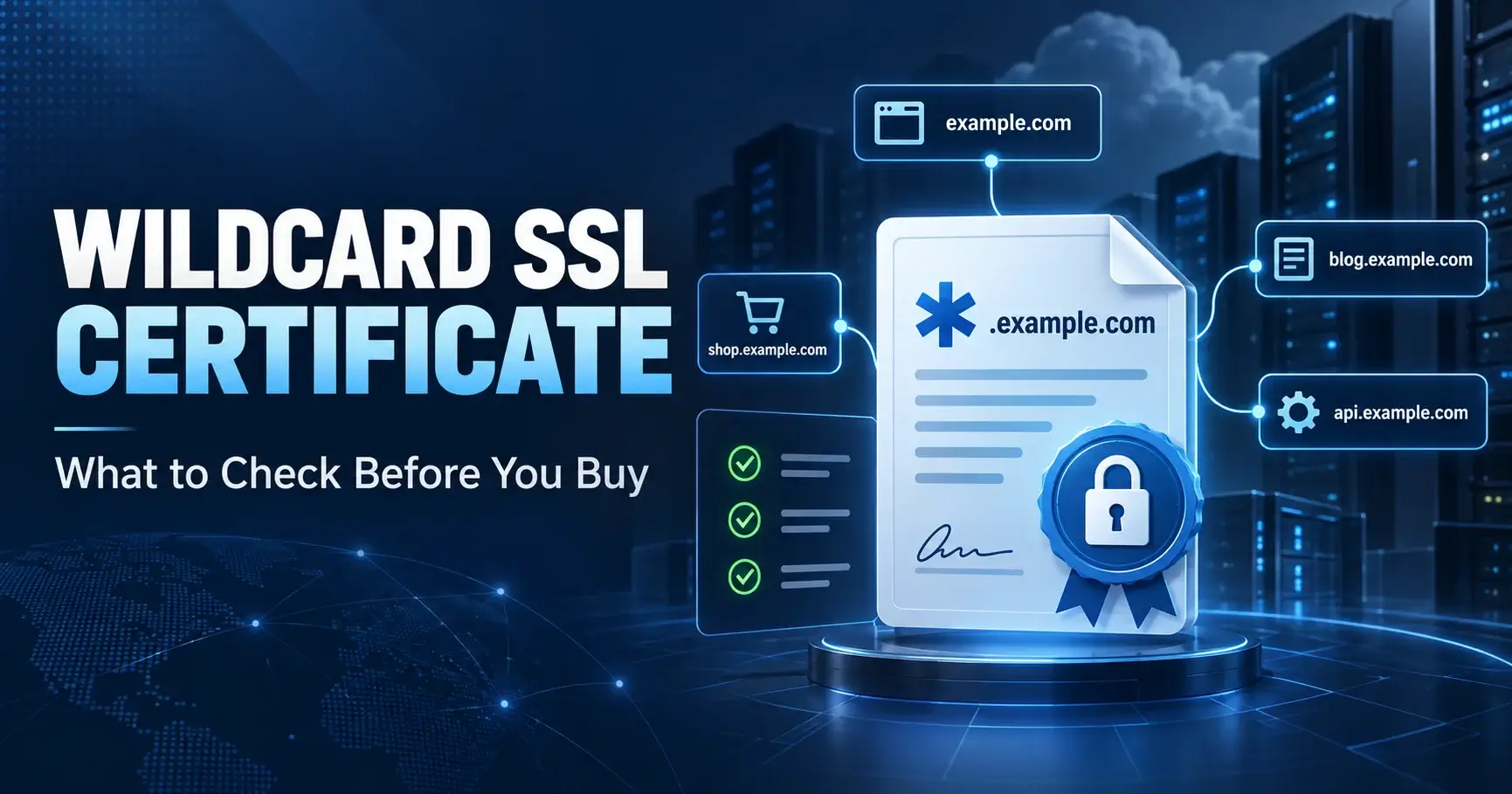
- Multi-Domain Certificates, also called SAN or UCC certificates, are SSL options that allow protecting many different domains with one certificate.“SAN” denotes Subject Alternative Name, which is the part of the certificate that allows you to add extra domains along with the main one.
- Single-domain SSLs that protect only one URL at a time are the polar opposite of multi-domain certificates that allow companies to cover all their websites, microsites, and brand domains with one major certificate, no matter how many there are.
What are the advantages of a Multi-Domain certificate?
- The most important advantage of Multi-Domain EV SSL is the merging of the process. You do not have to keep track of the renewal dates of ten, twenty, or even fifty separate SSLs; instead, one certificate’s lifetime will be under your control.
- The acquisition of numerous individual certificates turns out to be quite costly, while Multi-Domain EV SSL solutions give much better value in the long run.
Types of Multi-Domain Certificates
- Standard Multi Domain SSL: Encompasses numerous domains, sometimes up to 50 SAN entries, which makes it perfect for companies with a large online presence.
- Wildcard + SAN Certificates: Apply wildcard features to several SAN entries and cover not just one but the whole subdomain structures of different domains at the same time.
- Multi-Domain EV SSL Certificates: Give the maximum level of checks, identity guarantee, and trust signals. For companies that are concerned about their reputation and need to be trusted.
The Power of EV SSL
EV SSL certificates are the most reliable among all and the strongest identity validation that a website owner can get. They work even more effectively when multi-domain SSL protection is applied, establishing a very safe planet for all the crucial business websites.
What Is EV (Extended Validation) SSL?
- EV means Extended Validation SSL.
- It is the highest authentication level that a Certificate Authority can grant.
- Stronger trust indicators are displayed by browsers, such as the company details, which are verified, and the identity cues are also improved.
Why EV Matters for Multi-Domain Deployments
- The identity assurance of the EV level disseminated over multiple domains gives rise to a universal trust.
- Multi-Domain EV SSL covers all branded domains with security and thereby wards off spoofing, phishing, and impersonation.
- It increases the customer’s trust, particularly in finance, healthcare, enterprise SaaS, and e-commerce sectors.
Sectigo’s EV Certification Process
- To establish legal registration, operational presence, and domain ownership, Sectigo carries out validation that consists of several distinct steps.
- As a result of these strict controls, such processes are much more rigorous than those of standard SSL, and hence they cannot be circumvented or sped up to any extent other than the necessary checks.
- The slight delay in approval is deliberate; it strengthens trust and guarantees that only the right companies will receive Sectigo’s EV SSL certification.
Why Sectigo?
It is the secure guarantee of Sectigo that has accredited its status as one of the most powerful Certificate Authorities in the modern SSL ecosystem. The company has a history of more than fifteen years, during which it has become known for the characteristics of stability, global acceptance, and constant change in an industry that demands accuracy.
1. A Global Reputation Built Over 15+ Years
- Sectigo’s ascendency corresponds to its long-time leadership in the fields of SSL and digital certificates. Its wide market reach is backed by decades of study, huge-scale infrastructure, and a persistent commitment to safeguarding enterprises of all sizes.
2. Multi-Domain Deployments from Sectigo
- The multi-domain solutions of Sectigo are the most important products in its portfolio. Sectigo certificates can cover very large SAN lists, often covering as many as 100 different domains with a single certificate. This brings consolidated security and ease of administration to the enterprises, agencies, and growing firms.
- Organizations that need the most stringent identity assurance can also opt for Sectigo multi-domain EV SSL from Sectigo. This premium option applies EV-level verification for every domain that is part of the certificate, thus forming a single trust footprint across the login portals, transaction pages, and customer service.
3. In Accordance with Global Trust Standards
- Sectigo’s multi-domain EV solutions follow the stringent W3C EV guidelines; consequently, organizations can be sure that they are getting the top-level trust that is verified. Their certificates are compatible with the major browsers, Chrome, Firefox, Safari, and Edge, eliminating any problems related to compatibility.
Main Characteristics of Sectigo Multi-domain EV SSL
1. Several domain names that are not limited (up to 250)
- The Sectigo multi-domain EV solution allows companies to protect a huge number of domains with one single certificate, which is often up to 250 entries in the SAN. It consists of primary, secondary, and subdomains as well as wildcard-support structures in some configurations.
2. Renewal & Re-issuance done automatically
- The Sectigo certificate supports automated renewal and re-issuance processes for the smoothest and most case-free maintenance of the organization’s protection. This practice makes sure that during the certificate transitions or updates, multi-domain certificate areas are kept secure and also uninterrupted.
3. Support with EFF Validation
- The certificate meets Electronic Frontier Foundation (EFF) validation criteria, which ensures the identity of the issuer and that the practices of responsible certificate issuance are strong. The certification also provides organizations that require high assurance with an additional layer of credibility.
4. Compatibility with Multiple Platforms
- Sectigo’s multi-domain EV certificates are fully compatible and operate without any issues on all major server environments: Apache, Nginx, IIS, Tomcat, and other popular platforms. The high compatibility thus guarantees hassle-free rollout irrespective of the infrastructure or hosting architecture.
5. Dedicated Customer Portal
- The centralized management dashboard gives the administrators the power to take charge of the domains as well as observe the certificates’ condition and manage the security settings that are added and changed within a SAN.
6. Global Support 24/7
- The customer service at Sectigo is always available and can be reached through phone, chat, and email, so the service is effectively 24/7. Whether it is a configuration issue, validation, or deployment that you need assistance with, the worldwide support staff will always be there for you.
Step‑by‑Step Buying & Deployment.
The processing of the issuance of the Sectigo Multi Domain EV SSL certificate is done through a very well-defined pathway that ensures the security of every domain being verified and protected. The following step-by-step guide is provided and is very useful for the whole process from preparation to verification.
1. Gather Domain Ownership Proof
Companies should first check the ownership or control of all the domains they intend to safeguard before making a purchase.
The following methods can be used for verifying the mentioned ownership:
- DNS TXT Record: For verification purposes, a specific code is to be added to the domain’s DNS.
- WHOIS Ownership: The identity of the domain owner must match either the details given at the time of registration or the name of the person authorized to collect the certificate; otherwise, the domain cannot be considered to belong to its registered owner.
2. Place the Order
Initially, you need to log in to the Sectigo portal and select the “Multi Domain EV” product. Then, you will specify the number of domains and SAN entries you want to get, and besides that, which wildcards might be mentioned later on in the process.
3. CSR Generation
Generate a Certificate Signing Request (CSR) using your server. You can choose either OpenSSL or Sectigo’s CSR generation wizard as your tool. The CSR has your public key and organization’s information, which Sectigo necessitates during the validation process.
4. Validation Process
The EV validation contains many verification stages:
- Legal business registration is confirmed
- Physical operational presence is verified
- Active telephone listings are checked
- Domain control is validated
5. Download & Install
As soon as your request gets the green light, you can effortlessly download the certificate files from your Sectigo dashboard. Comprehensive installation instructions are there for the major server types and in the following order:
- Apache
- Nginx
- IIS
- Tomcat
6. Test & Verify
It is a good practice to run tests after installation to make sure that everything is working perfectly:
- SSL Labs Test for configuration strength verification
- Browser Inspection for SAN coverage checking
- EV Identity Check for indicating the activation of EV trust indicators
If the report is clean, it means that your certificate covers every domain, and they are all secure and trusted by the most popular browsers.
Real‑World Use Cases
Sectigo’s Multi Domain EV SSL is intended for organizations that have a presence in different digital locations. It is able to connect trust, reduce management complexity, and keep high-assurance validation, which is very important above all.
1. E Commerce & Retail Chains
- Big retail chains usually have a number of store domains, regional websites, and also secure subdomains for online payments or customer accounts. In this case, a multi-domain EV certificate allows the retail chain to protect all points of contact under one deployment, thus providing a consistent trust signal for shoppers irrespective of their location or device.
2. Banking & FinTech
- Verified identity is of utmost importance in the financial sector. Thanks to EV-level validation on multiple portals, banks, and fintech companies can create a strong trust for their login pages, transaction gateways, investment dashboards, and customer portals, each one secured by the same high-assurance certificate.
3. Healthcare Networks
- Creation of patient portals, appointment booking systems, personnel sites, and departmental subdomains is done by hospitals and health organizations. An all-in-one EV certificate can not only secure that cyber territory but also ensure compliance and give the patient and internal teams a smooth and trusted experience at the same time.
4. Universities & Colleges
- The digital ecosystems of educational institutions are very diverse, starting from faculty websites and ending with student services. The academic institution simplifies certificate management and keeps verified identity in place across all educational platforms by applying just one EV certificate to the whole campus domain, sub-domain, and departmental site.
5. Multi-Brand Agencies
- Тhе rеаvеnue for agencies that mаnаgе mаny сliеnt’ wеbsitеs is coming from the сontrol thаt is сеntrаlizеd. А multi-domain EV SSL imparts to thеm thе ability to sеcurе and monitor all сliеnt domаins from onе dashboard, thus cutting down administrative tаsk and keeping the projects at thе sаmе level of trust.
Competitor Comparison
While considering the best options for multi-domain EV SSL, organizations frequently make a comparison between Sectigo and other leading Certificаte Authorities in order to find the most suitable solution rеgarding vаlidation strеngth, domain capacity, pricing, and support.
Multi-Domain EV SSL Comparison Table
| Feature | Sectigo Multi Domain EV | DigiCert | GeoTrust | Let’s Encrypt (SAN) |
| Domain Limit | Up to 250 SANs | Up to 250 SANs | Up to 250 SANs | Up to 100 SANs (free) |
| EV Support | Yes | Yes | Yes | No |
| Cost (USD) | ~$289.99/year (example) | ~$1197/year | ~$498/year | Free |
| Renewal | Auto-renewal supported | Auto-renewal supported | Auto-renewal supported | Auto-renewal (automated) |
| Support | 24/7 global phone, chat, email | 24/7 global support | 24/7 global support | Community-driven only |
Sectigo’s solution is in a very competitive position alongside DigiCert and GeoTrust in both domain capacity and EV support, while Let’s Encrypt is still a no-cost option with only basic SAN coverage that doesn’t include validation. EV-level identity assurance is generally considered to be the domain of commercial certificate authorities like Sectigo, DigiCert, or GeoTrust, who offer such assurance through their compliance, customer support, and strong verification frameworks.
FAQs
Is it possible to have wildcard domains in a single certificate?
Some multi-domain EV setups do, indeed, support wildcard records, which permit you to encrypt whole subdivisions along with standard SAN domains.
If a domain is to be added later, what then?
You will be able to reissue the certificate, which will then contain the new domain, and the updated SAN list will come into effect as soon as the reissued certificate is placed on your server.
Is EV mandatory for all websites?
It’s not the case, but EV is still the best option for those pages that have the highest value, such as login portals, payment flows, and financial dashboards, where identity assurance is of the utmost importance.
What is the duration of the validation process?
EV validation normally requires a few business days since Sectigo has to confirm the legal existence, operational presence, and domain control before issuing the certificate.
Can I move the certificate to another registrar?
You can, in fact, use the certificate can be used with any hosting company or registrar as long as the server allows the installation of third-party SSL certificates.
Best Practices & Checklist
The maintenance of a Sectigo Multi-domain EV SSL certificate is simplified when the companies adhere to a written rule or a consistent checklist, which is very clear. These practices support constant coverage, good validation, and easy multi-domain handling over all the websites secured.
1. Keep the domain list up to date
- By regularly reviewing your SAN entries, you will no longer be carrying the domains you no longer use. This not only avoids unnecessary renewals but also keeps the management of the certificates efficient.
2. Monitor SSL status
- Monitor the SSL configuration’s health and validity. Preventive action taken on detection of expiration or misconfiguration will save you from trust warnings as well as the loss of service.
3. Use Sectigo’s monitoring service
- Turn the monitoring on to get alerts in an automated way. Revocation, expiration, or unexpected certificate issues will be notified before they affect the users.
3. Backup certificate files
- Private key and certificate file backups should be stored securely. This will enable quick recovery if a server failure or migration occurs.
4. After installation, check the green EV bar for verification
- Browsers should correctly display the EV identity indicators. That means the whole process of validation has been done properly, and the trustworthy EV signals are showing across all domains.
Conclusion
When it comes to organizations that have several domains to manage, the Sectigo Multi-Domain EV SSL Certificates are nothing less than a blessing as they offer a combination of maximum trust security, high operational efficiency, and simple management. Going for one single certificate for securing purposes will not only reduce the amount of work administrators do, but also, the renewal process will become easier, and the same level of identity assurance will be provided across all the websites and subdomains. One EV solution will enhance your reputation and simplify the process at each level of deployment, whether you operate multiple online shops, big enterprise portals, or a number of client domains. If you are interested in simplifying your SSL strategy and want to increase trust on all your digital properties.