A lot of buyers start their SSL search with a basic assumption, like all wildcard SSL certificates are basically the same, so the cheapest one has to be the best deal. Honestly, at first glance, that sounds pretty logical. I mean, every SSL certificate encrypts data and lets you run HTTPS. Yet, more experienced IT teams, hosting providers, and web agencies will tell you the real gap isn’t always in the price. The bigger issue is whether the certificate layout actually fits what you run today AND what you plan to scale into later.
A wildcard SSL certificate can be a pretty economical approach to protect many subdomains beneath one main domain. Still, if you pick it just because it’s cheaper, without really checking the coverage needs, you might end up with awkward admin headaches later on.
In this guide, we’ll walk through how to judge the cheapest wildcard SSL certificate options that are on the table in 2026, plus what drives pricing up or down. We’ll also cover when a more adaptable option, such as Comodo Positive Multi-Domain Wildcard SSL, could end up being the stronger long-term value.
What a Wildcard SSL Certificate Actually Protects
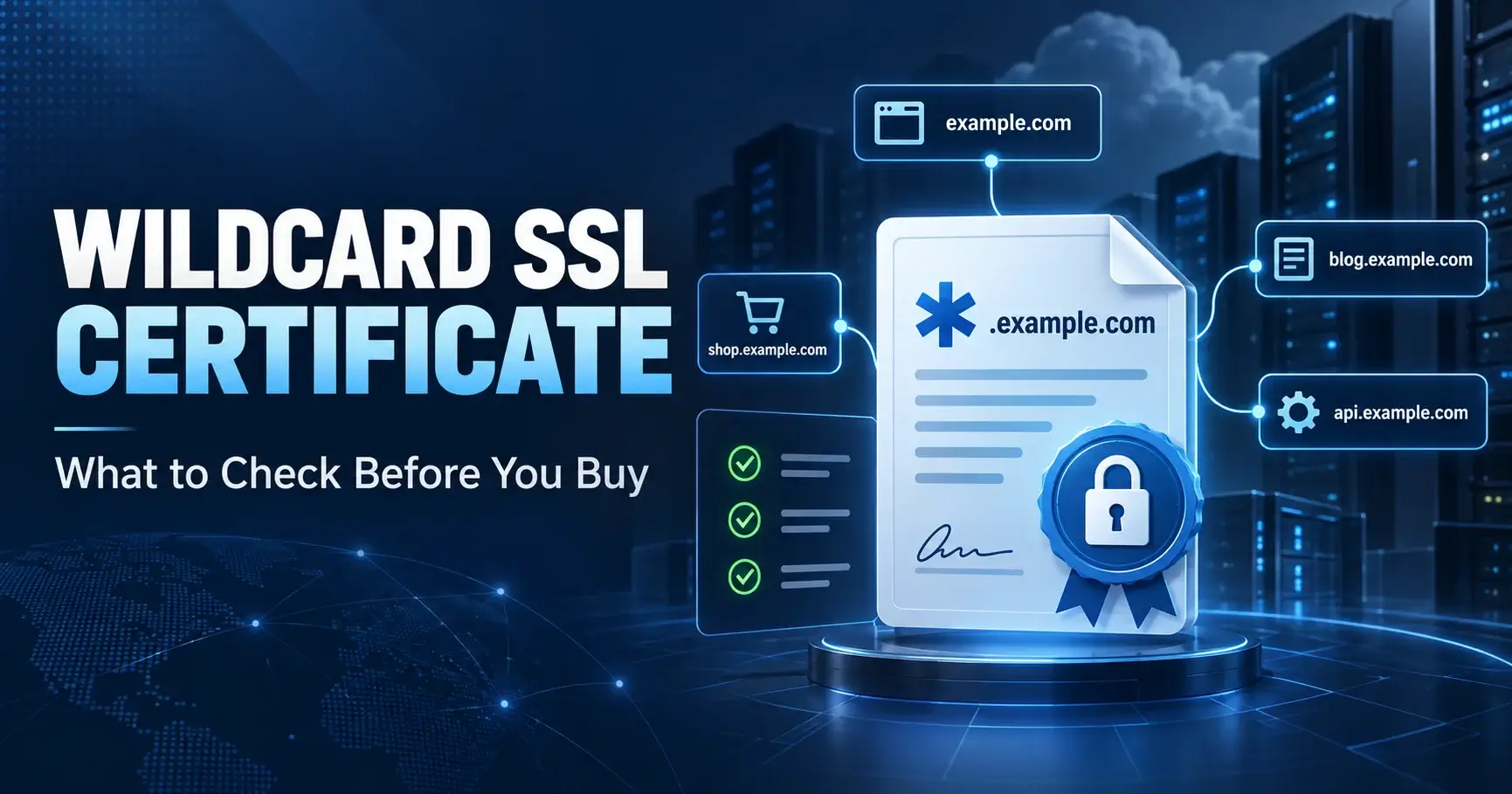
A wildcard SSL certificate is designed to secure one primary domain along with unlimited first-level subdomains under that domain.
For example, if your main domain is:
example.com
A wildcard SSL can protect:
- www.example.com
- mail.example.com
- blog.example.com
- shop.example.com
- api.example.com
Instead of purchasing separate certificates for every subdomain, one wildcard certificate can secure them all.
This is why many organizations view wildcard SSL certificates as one of the most efficient approaches to certificate management.
However, there is a common misconception worth addressing.
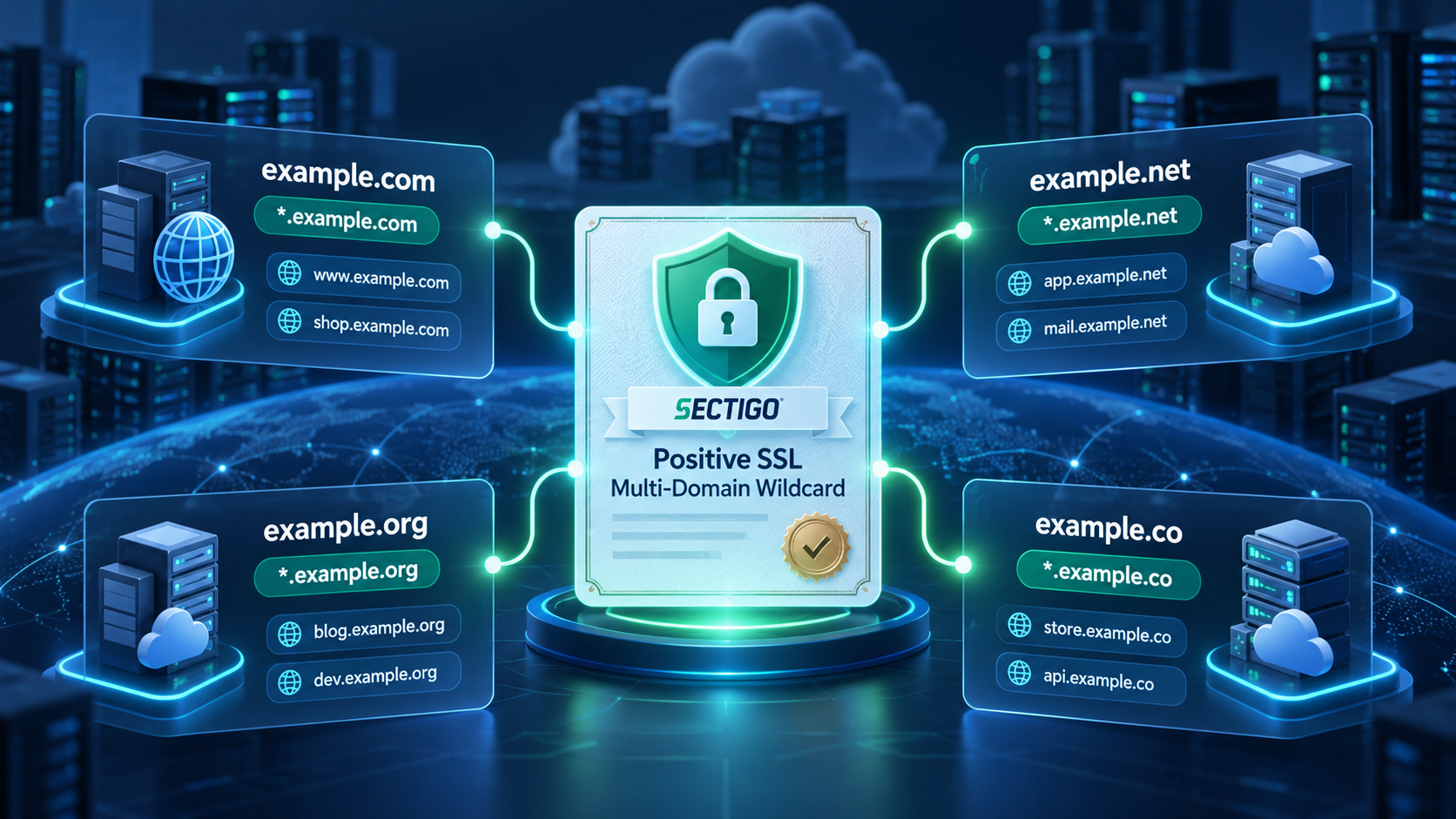
A wildcard SSL does not automatically secure completely different root domains.
For example:
- example.com
- example.net
- example.org
These would require additional coverage through another certificate structure.
Understanding this distinction is critical before making a purchase decision.
Why Buyers Search for the Cheapest Wildcard SSL Certificate
There is a practical reason the keyword cheapest wildcard ssl certificate continues to attract significant search demand.
Most buyers are not looking for the lowest price simply to save money. They are trying to maximize security coverage while controlling operational costs.
Common motivations include:
Budget Constraints
Small and medium-sized businesses often operate with limited IT budgets. Security investments must demonstrate value while remaining affordable.
Avoiding Multiple SSL Purchases
Managing separate certificates for every subdomain quickly becomes inefficient and expensive.
Simplified Administration
A single certificate can reduce renewal tracking, deployment complexity, and maintenance workloads.
Better Cost-to-Coverage Ratio
Organizations frequently discover that one wildcard SSL provides significantly better coverage than purchasing multiple standard certificates.
The goal is usually not “cheap security.” The goal is efficient security.
What Affects Wildcard SSL Pricing
Not all wildcard SSL certificates are priced the same because several factors influence their value.
Validation Type
Domain Validation (DV)
DV certificates verify domain ownership and are generally the most affordable option.
They are ideal for:
- Blogs
- SaaS applications
- Development environments
- Small business websites
Organization Validation (OV)
OV certificates include business verification in addition to domain validation.
They provide additional trust signals that may be valuable for organizations handling sensitive customer information.
Brand Reputation
Certificate Authorities have different levels of market recognition.
Some organizations prefer globally recognized providers because procurement teams, compliance departments, and enterprise customers are already familiar with them.
Support and Warranty
Pricing often reflects:
- Technical support availability
- Warranty protection
- Reissuance flexibility
- Customer service quality
Issuance Speed
Certain certificates can be issued within minutes, while others require additional verification processes.
Coverage Flexibility
Some certificates support more advanced deployment scenarios, including multiple domains and wildcard functionality combined.
This expanded capability naturally affects pricing.
Cheapest Wildcard SSL Certificate vs Positive Multi-Domain Wildcard SSL
This comparison is where many buyers discover the difference between cost and value.
When a Standard Wildcard SSL Is Enough
A traditional wildcard SSL works extremely well when you have:
- One business
- One primary domain
- Multiple subdomains
For example:
- shop.company.com
- support.company.com
- api.company.com
In this scenario, a standard wildcard SSL is often the most economical choice.
When Coverage Efficiency Matters More
Now consider a growing agency managing:
- brandone.com
- brandtwo.com
- brandthree.com
Each domain contains multiple subdomains.
Managing separate wildcard certificates for every domain can quickly create certificate sprawl.
This is where Comodo Positive Multi-Domain Wildcard SSL becomes attractive.
Rather than focusing solely on purchase price, buyers should evaluate coverage efficiency:
- Number of certificates required
- Renewal workload
- Deployment complexity
- Risk of expiration-related outages
The most economical solution over three years may not be the cheapest certificate purchased today.
When the Cheapest Wildcard SSL Is a Good Choice
A budget-friendly wildcard SSL can be an excellent investment when:
You Operate One Primary Website Ecosystem
Everything runs under a single domain structure.
You Have Many Subdomains
Applications, portals, APIs, blogs, and customer areas can all be protected under one certificate.
Future Expansion Is Predictable
If you do not anticipate managing multiple root domains, a standard wildcard SSL remains highly efficient.
Cost Control Is a Priority
Organizations focused on minimizing upfront spending often find that a DV wildcard certificate provides exactly the protection they need.
When the Cheapest Option Can Become Expensive Later
Security architects often encounter environments where early SSL decisions create higher costs later.
Examples include:
Multiple Brands
Organizations that acquire or launch additional brands frequently introduce new domains.
Agency Growth
Web agencies managing dozens of client environments can accumulate large numbers of certificates.
Hosting Platforms
Hosting providers often need scalable certificate strategies across numerous domains and services.
Expanding SaaS Infrastructure
As platforms evolve, additional domains and environments become common.
In these cases, choosing the cheapest option initially can result in:
- More renewals
- More certificate inventory
- More administrative overhead
- Greater risk of missed expirations
The hidden costs are operational rather than technical.
Best Use Cases for Comodo Positive Multi-Domain Wildcard SSL
Certain environments benefit significantly from a multi-domain wildcard approach.
Digital Agencies
Agencies supporting multiple client projects can simplify certificate administration.
Multi-Brand Organizations
Companies operating several websites under different brands gain broader coverage flexibility.
Hosting Providers
Reducing certificate sprawl improves operational efficiency.
SaaS Teams
Development, staging, customer portals, and branded environments can often be managed more effectively through consolidated SSL structures.
The primary benefit is not merely broader coverage; it is reduced management complexity.
How to Choose the Right Budget Wildcard SSL in 5 Steps
Before purchasing, use this simple evaluation framework.
1. Count Your Domains
Identify every root domain requiring protection.
2. Count Your Subdomains
Estimate both current and future subdomains.
3. Decide Whether DV Is Enough
Most businesses can operate successfully with DV certificates.
Organizations with stricter compliance or procurement requirements may prefer OV validation.
4. Estimate Future Expansion
Think beyond today’s infrastructure.
Ask:
“What will our environment look like in two years?”
5. Compare Management Effort, Not Just Price
The cheapest certificate isn’t always the lowest-cost solution.
Factor in:
- Renewals
- Administration
- Deployment workload
- Operational risk
This approach leads to better long-term decisions.
FAQs
What is the cheapest wildcard SSL certificate?
Typically, Domain Validation (DV) wildcard SSL certificates represent the most affordable category. Pricing varies by provider, support options, warranty, and included features.
Does a wildcard SSL cover unlimited subdomains?
Yes. A wildcard SSL certificate secures unlimited first-level subdomains under a single root domain.
What is the difference between wildcard SSL and multi-domain wildcard SSL?
A standard wildcard SSL protects one domain and its subdomains. A multi-domain wildcard SSL can secure multiple domains while also providing wildcard coverage for those domains.
Is Comodo Positive Multi-Domain Wildcard SSL worth it?
For businesses managing multiple domains, brands, or client environments, it can significantly reduce certificate management complexity and improve coverage efficiency.
Should I buy a DV wildcard or OV wildcard certificate?
DV wildcard certificates are suitable for most websites and applications. OV wildcard certificates may be preferred when additional business validation and organizational identity are required.
Can one wildcard SSL secure multiple domains?
A standard wildcard SSL cannot. Multi-domain wildcard SSL certificates are specifically designed for that purpose.
Conclusion
Finding the cheapest wildcard ssl certificate is about more than securing the lowest price; it’s about choosing the right certificate structure for your business. A standard wildcard SSL can be an excellent investment for organizations managing a single domain with multiple subdomains, delivering strong encryption and simplified certificate management at an affordable cost.
However, if your environment includes multiple brands, domains, client websites, or growing digital infrastructure, a solution like Comodo Positive Multi-Domain Wildcard SSL may provide greater long-term value by reducing certificate sprawl and administrative overhead.
Before making a purchase, evaluate your current domain structure, future expansion plans, and ongoing management requirements. The most cost-effective SSL strategy is the one that protects your business today while supporting growth tomorrow.
Need help deciding between a standard wildcard SSL and a multi-domain wildcard SSL? Compare your options carefully and choose a solution that balances security, scalability, and operational efficiency.